
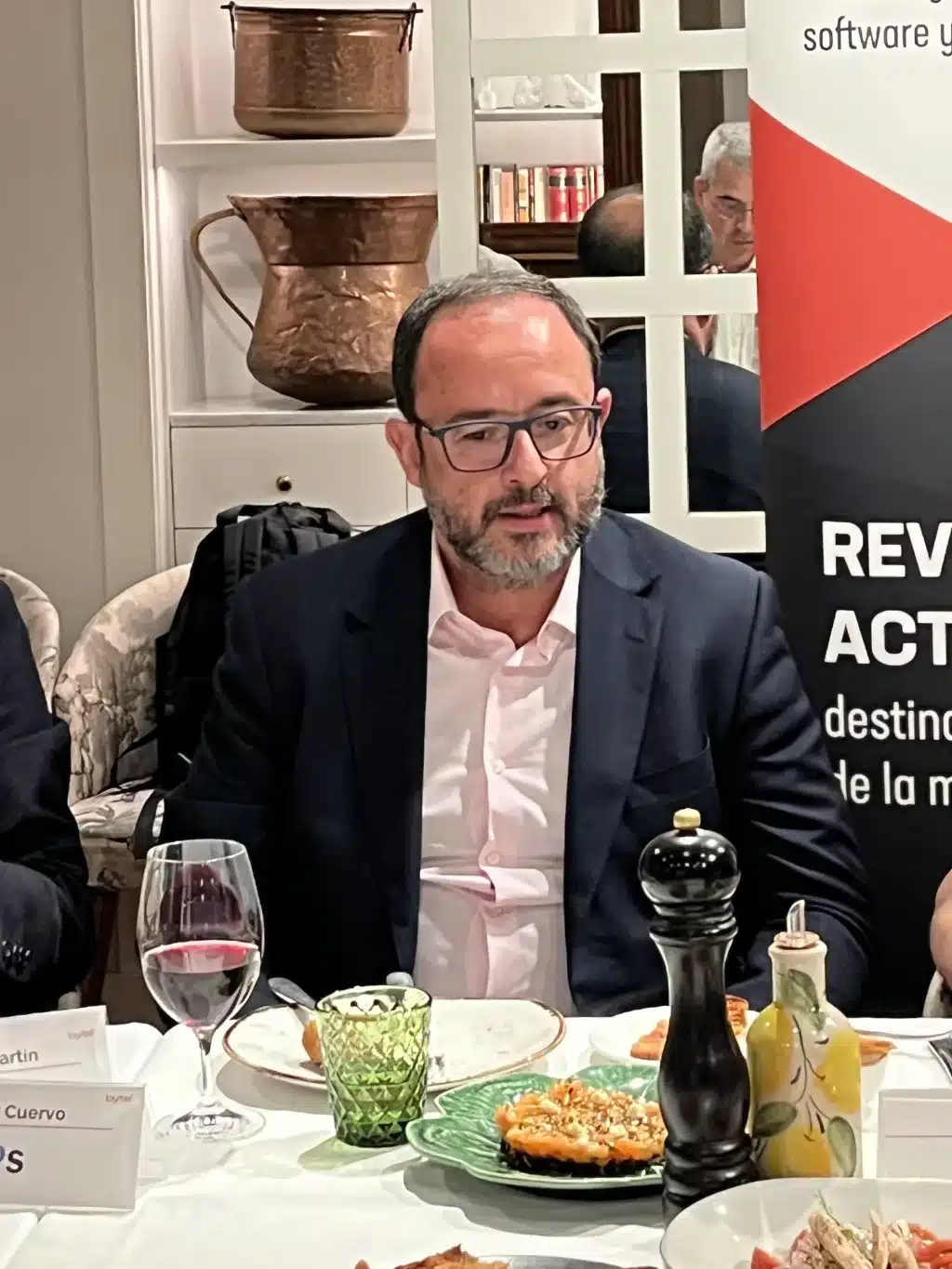
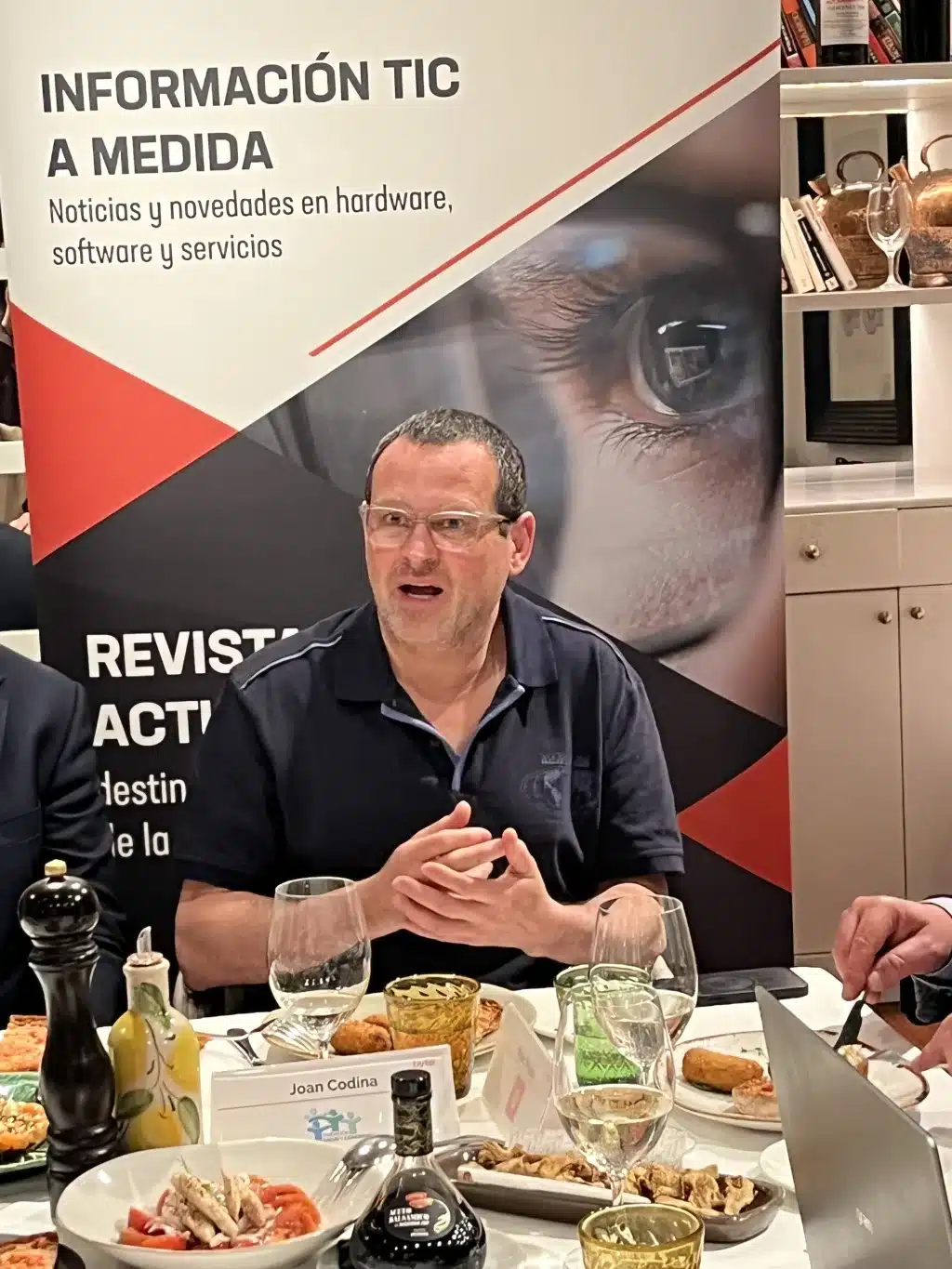
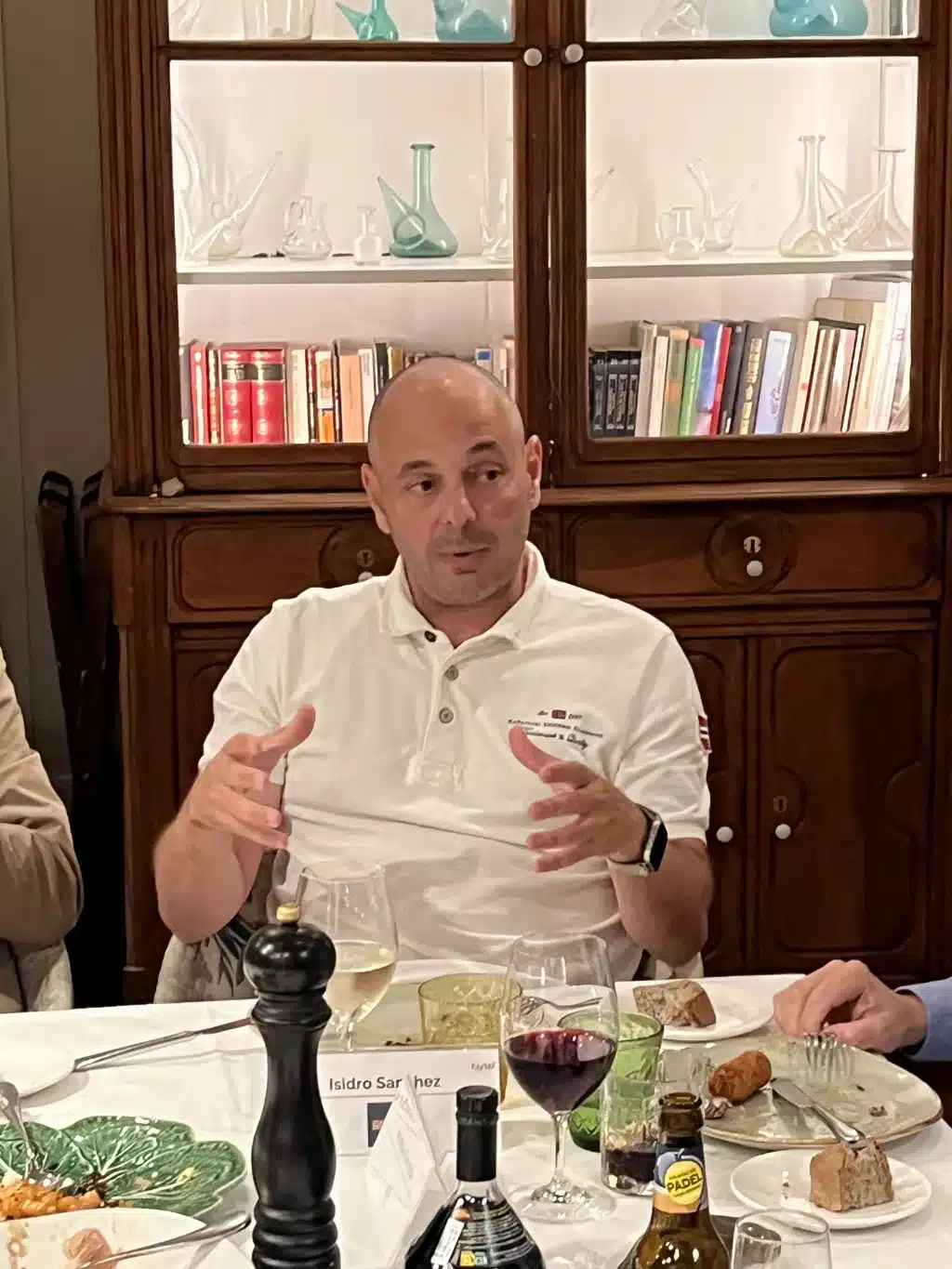
To analyze how to apply AI, Byte TI, together with Samsung, H&K and LinkRoad, organized a meeting in Barcelona that included the participation of Marc Pausdeputy IT director at IESE Business School; Joan CodinaDirector of Technology at Fundació Salut i Comunitat; Victor Cuervohead of Architecture at Banc Sabadell; Enrique Martindirector of sales and business development in large companies and administrations at Samsung; Xavier Altafulladirector of systems and technology of the National Art Museum of Catalonia; Lucas Viladomi, H&K Data AI Transformation Manager; Andres BarredaCIO of Encuentro Moda; Isidro SanchezIT Manager at Jotun; Albert Sierra, CIO of the Barcelona Chamber of Commerce; Nacho Santillanamanaging partner of LinkRoad; and Jordi Francés, former CIO of Applus.
Artificial intelligence has ceased to be an experimental tool and has become a structural element of business strategy. Its adoption is no longer limited to pilot projects or isolated innovation initiatives, but is beginning to influence the way organizations design processes, make decisions, manage talent and relate to their customers.
Several attendees agreed that AI is advancing rapidly, but that its success depends less on technological deployment than on the quality of the data, the internal culture and the ability of companies to clearly define what problem they want to solve. They also agreed that adoption must be done judiciously: not every use case provides value, not every automation improves efficiency, and not every response generated by an intelligent system deserves to be accepted without supervision. A good part of the future of digital transformation is being played in this balance between ambition and prudence.
In several of the interventions, the idea appeared that AI already occupies a central place in corporate plans, although each company is incorporating it with a different logic. For example, Marc Paus, deputy director IT at IESE Business School explained that “the most repeated word in the 2026-2029 strategic plan is AI.” He stated that the institution views it in two dimensions: “on the one hand, as an internal tool to automate and improve processes; on the other, as part of the training it offers to the market.” His vision, he insisted, is that of a human AI, with criteria and limits. In other words, it’s not just about doing more with less, but about deciding what a machine should do and what still requires professional judgment.
Enrique Martín, director of sales and business development in large companies and administrations at Samsung, stressed that the company has moved from security to AI and is already applying it throughout the organization, even in household appliances. As he explained, “the discussion does not revolve solely around technical capacity, but how to bring that intelligence to devices in a useful and sustainable way. Three concepts appear that were repeated in the conversation: savings, privacy and scalability. AI, to be truly strategic, must generate efficiency without compromising trust or triggering operational complexity.”
Technology services companies are also using AI as an internal engine and as a commercial argument. Lucas Viladomi, Data AI Transformation Manager at H&K explained that “H&K, a consulting firm specialized in software development and maintenance that unified data and AI in its structure to lead the digital transformation from within.” As he stated during the meeting, “a company that aspires to help others transform has to first demonstrate that it knows how to apply that transformation at home and that is what we do.”
For his part, Nacho Santillana, for his part, described LinkRoad as “an international group prepared to accompany large companies in their digital evolution with cloud solutions, digital experience, SAP, Data-AI and regulatory compliance.”
Real use cases
The value of AI appears sooner in concrete tasks than in big corporate speeches. Joan Codina, Director of Technology at Fundació Salut i Comunitat explained that “in the IT area we use AI to set up a PC, help with programming, create content or respond to emails.” He also noted that the tools they already use incorporate AI to design a new center or answer questions about how to do something they didn’t know how to address before. The logic is simple: artificial intelligence becomes useful when it reduces friction, speeds up decisions, or opens up paths that previously took too much time.

At Banc Sabadell, Víctor Cuervo defined AI as “one of the bank’s basic lines of transformation.” Its impact, he said, “reaches almost all areas: conversations with customers, contact centers, human resources, development and cybersecurity. This breadth makes it a transversal technology, but it also forces us to order priorities. It is not enough to deploy solutions; we must select where AI produces a measurable improvement and where it only adds noise.”
In the cultural and public sphere, Xavier Altafulla, director of systems and technology at the Museu Nacional d’Art de Catalunya, introduced a very relevant idea: the balance between automating and not overloading IT teams. As he explained, “there are areas where the gain is much greater than in others, such as the legal field, where AI can significantly help in the drafting of legal texts. But, for the value to be real, the organization must train the users and then verify that their use of the tool is correct. The decisive phase is not the installation, but the adoption.”
For his part, Andrés Barreda, CIO of Encuentro Moda, summarized his approach with a very visual formula: “IA first.” By it he meant that “before implementing a solution you have to ask yourself if it adds value. In your organization, the first relevant use case is in the design area, where AI helps visualize how a print will look on a garment.” The example illustrates well a common trend in the business fabric: AI is beginning to enter creative and business processes, not only administrative tasks.
Data and trust
The conversation made it clear that there can be no serious AI strategy without a solid foundation of data. Lucas Viladomi warned that “many companies try to accelerate their entry into artificial intelligence without having first resolved basic issues such as data quality, security or technological structure.” His thesis is that before putting an intelligent layer on a system, we must clear the ground and understand the real state of the organization. Without that preparation, AI runs the risk of amplifying errors rather than resolving them.
Jordi Francés, former CIO of Applus, was even more direct: “An AI program begins with the digitization of data. Without that, the technology does not work. Furthermore, it must be emphasized that many companies talk about AI without having a clear use case that justifies its application. I believe that every implementation must respond to a logic of profitability, because otherwise the initiative loses meaning. Artificial intelligence cannot be sustained on rhetoric; it needs metrics, purpose and results.”

Trust is another of the great challenges. Nacho Santillana, managing partner of LinkRoad, explained that today there are tools to audit AI thinking and verify what the system is really doing. Santillana warned that “not everything that the machine produces can be considered good. Sometimes, organizations validate responses without analyzing them, even if the example is not trivial.” Víctor Cuervo reinforced that idea by pointing out that AI makes interpretations and that these interpretations must be monitored. For his part, Lucas Viladomi added that, in his company, they cross two critical points before giving a valid result.
Cultural change and productivity
The main obstacle no longer seems technical, but human. Xavier Altafulla stated that “the most important challenge is change management, because AI forces us to work with emotions, incentives, careers and expectations. In many organizations, the real debate does not revolve around the power of the model, but rather about the teams’ fear of being displaced.”


For his part, Andrés Barreda precisely pointed out that one of the problems is the perception that AI can leave part of the workforce out of work. However, he recalled that “the opposite happened before: there was a lack of automation. The current challenge is to explain the purpose of the tool and align the organization with that objective.”
The CIO of the Barcelona Chamber of Commerce, Albert Sierra, insisted that AI “must be understood as a lever of acceleration and efficiency, but it will only work if it is accompanied by culture. At the Barcelona Chamber of Commerce, we have worked with the idea of “AI governance” in the same way that we previously spoke of data governance. To boost its deployment, around thirty people have even been identified that AI itself proposed as drivers within the departments. The objective is not only to automate tasks, but to redefine what the company does with the time it gains thanks to automation.”
Finally, Jordi Francés added a particularly powerful reflection: the speed of change is so high that those who do not adapt are left out. He compared it to previous technological revolutions, from the emergence of the Internet to the expansion of the iPhone, but with a difference: “AI is entering faster and with a more transversal impact. This acceleration forces companies to review their training, their processes and, above all, their way of thinking. Because the big question is no longer whether AI will arrive, but whether organizations will know how to integrate it intelligently before inertia leaves them behind.”
