
The company V-Valley held a new edition of its already consolidated Cybersecurity Summit on April 16 and 17 in Segovia, reaching its fifth call in 2026 and reaffirming itself as one of the benchmark meetings in the sector within the field of business cybersecurity.
Over two intense days, the event has once again brought together some of the sector’s leading security experts, along with manufacturers, partners and strategic partners that make up a key ecosystem to promote digital security in organizations. Year after year, this forum consolidates itself as an essential space for the exchange of knowledge, analysis of trends and identification of the real challenges faced by companies of all sizes, including SMEs.
The strategic role of the V-Valley Cybersecurity Summit event
In the words of Alberto López, Country Manager of Cybersecurity at V-Valley, “collaboration between manufacturers, partners and experts is essential to build a more secure digital environment.” During the meeting, López also received recognition for his more than 30 years of professional career in the sector, highlighting his role in the creation and development of the company’s current cybersecurity business unit, which today has more than 80 professionals.
The first day included a discussion table in which 22 of the main cybersecurity manufacturers participated, along with various partners, openly addressing the challenges and opportunities of the market. The debate, led once again this year by journalist José Yélamo, stood out for its dynamism and the diversity of perspectives provided by the participants.
For his part, David Gasca, Executive Lead at V-Valley, highlighted during the opening of the event the company’s differential positioning: “we are the only wholesaler with a presence in the Enterprise, commercial, SMB and professional services market, offering a comprehensive proposal unique in the sector.” Likewise, he highlighted the role of the human team as the main driving force and facilitator of the business.
In this new edition of the V-Valley Cybersecurity Summit, the event has exceeded all attendance expectations, with more than 210 in-person participants, which represents an increase of 30% compared to the previous year. Added to this are nearly 400 partners who followed the sessions via streaming, thus expanding the scope of the meeting.
State of cyber threats
The first block focused on the evolution of cybercrime, which is increasingly professionalized and accessible. Víctor Sánchez, from the National Police Corps and C1b3rwall, highlighted how technologies such as artificial intelligence or post-quantum computing represent an opportunity for both defense and attackers, underscoring the importance of collaboration between the public and private sectors. Along these lines, Eusebio Nieva, from Check Point, warned that AI is drastically reducing the barrier to entry to cybercrime, multiplying the number of actors capable of launching sophisticated attacks.
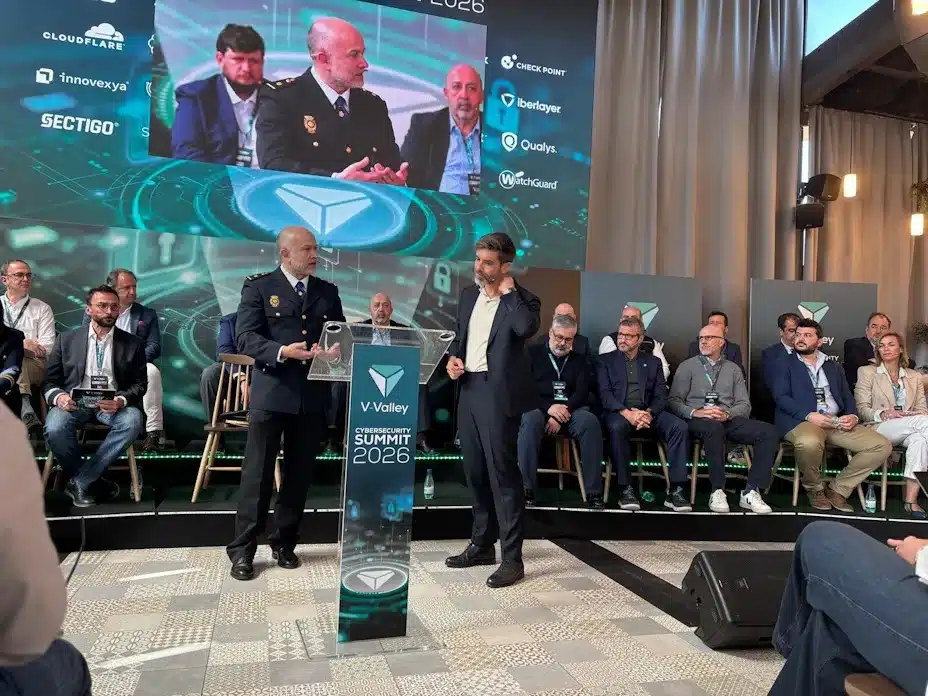
Experts agreed that attacks continue to exploit basic vulnerabilities. Sergio Martínez, from SonicWall, recalled that 85% of incidents begin with identity theft, while Fernando Martínez pointed out the 135% increase in malware in organizations. The supply chain is consolidated as one of the weakest points, especially due to the lower maturity in cybersecurity of SMEs and suppliers.
From the channel’s perspective, Óscar Suela, general director of Kaspersky Iberia, defended the key role of partners as enablers of managed services for SMEs, while David Valdomero, from Trendsys, insisted on the need to commit to comprehensive security models. The consensus was clear: cybercrime is now a global industry, and only a coordinated response will allow us to confront it.
The Ultimate Strike: Offensive AI and New Frontiers
Artificial intelligence was the protagonist in the second block, addressing its offensive use and the new associated risks. Researcher Martín Vigo explained how techniques such as “prompt injection” allow AI systems to be manipulated to provoke unwanted behavior, warning that the growing integration of these systems significantly expands the attack surface. “We are increasingly introducing more AI into our processes, and that generates new vectors that we must control,” he noted.
Fernando Martínez, from Horner Security, stressed the difficulty of establishing effective barriers against these attacks, especially due to the social engineering component. In this context, visibility is positioned as a critical element: organizations must be able to audit both the inputs and outputs of AI systems in detail to detect anomalies in real time.
For his part, Eusebio Nieva stressed that AI represents a paradigm shift, since it introduces a new attack surface that requires specific solutions, even based on artificial intelligence itself. Óscar Suela added the risk of shadow IT associated with the uncontrolled use of intelligent agents, pointing to the need for a cultural change in organizations.
The block concluded with a clear idea: AI not only transforms the defense, but also accelerates and sophisticates the attack, forcing a complete rethinking of cybersecurity strategies.
The human factor: talent, diversity and fatigue in teams
The third block highlighted the role of people as a central element of cybersecurity. Eduvigis Ortiz, from Women4Cyber Spain, highlighted the urgent need for talent, recalling that the sector requires millions of professionals globally and more than 100,000 in Spain. In addition, she highlighted the importance of diversity, with 31% of women in the sector in the country, and the need to continue promoting vocations.
The speakers agreed that one of the great challenges is the management of change within organizations. “The basics continue to be a pending subject because people do not always understand the impact of technology on their daily lives,” it was noted during the debate. Added to this is the increasing fatigue of the teams, derived from demanding environments and the shortage of professionals.
María Campos, from Elastic, warned about the difficulty of disconnecting in highly competitive environments, while Rocío Martínez highlighted the increase in mental health programs in technology companies. From the channel’s point of view, Noé Villar defended growth models that combine junior and senior talent, betting on organizational cultures focused on people.
The message was clear: without talent, motivation and well-being, cybersecurity cannot be sustained, no matter how advanced the technologies are.
The regulatory tsunami with DORA and NIS2 and its impact on the supply chain
The impact of regulation focused on the fourth block, where Ramsés Gallego, from DXC Technology, defined the current context as a “tsunami” composed of multiple regulations such as DORA, NIS2 or RGPD. Beyond compliance, he insisted that cybersecurity must be understood as a corporate risk that affects the entire organization, focusing on the concept of value at risk.
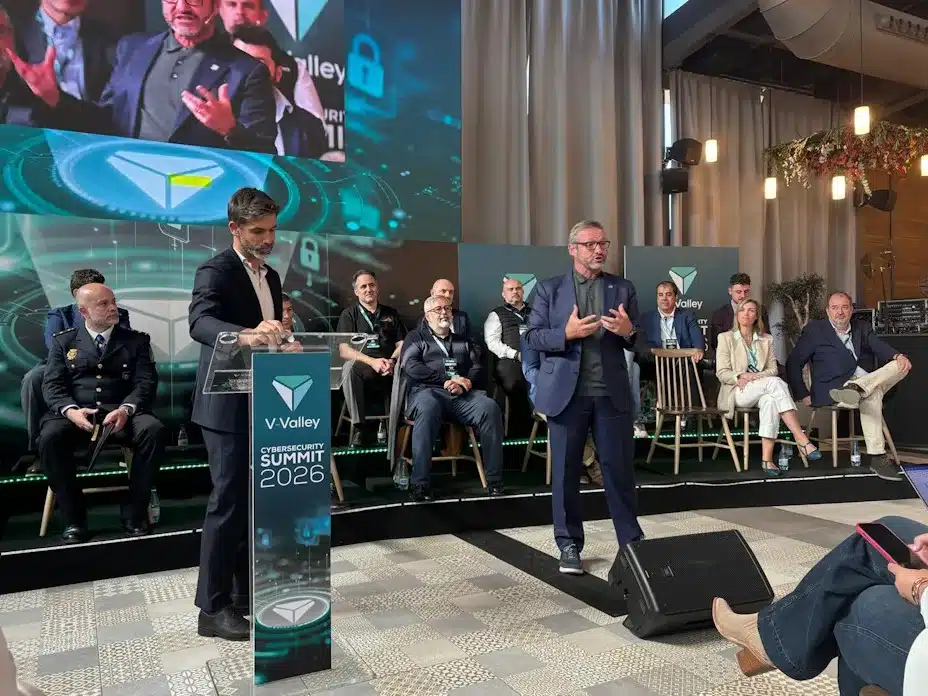
Experts agreed that these regulations are transforming the supply chain. Dámaso Ramos, from V-Valley, explained how large companies transfer the demands to their suppliers, forcing SMEs to raise their level of security. In this sense, Santiago Pérez, from Veeam, highlighted that regulations help to structure trust models and organize risk management.
Rocío Martínez, from Entrust, highlighted the key role of identity and cryptography in this new framework, while other speakers warned about the “regulatory fatigue” that affects many organizations. Still, the consensus was that these regulations represent an opportunity to improve resilience and foster collaboration between areas such as IT, security and operations.
Cyber defense and critical infrastructure: protection of the OT/IoT ecosystem
The protection of industrial environments and OT/IoT systems starred in the fifth block, where the need to adapt the cybersecurity approach to these contexts was highlighted. Alejandro Villar, from TRC, insisted that the traditional IT model cannot be directly transferred: “in industrial environments we must talk about risk and impact on the operation, not only about vulnerabilities.”
The speakers agreed that the convergence between IT and OT, together with the opening of systems to remote connections, has eliminated the old “walls” of protection, increasing risk exposure. In this scenario, visibility is once again key, as Rocío Vaquero, from Armis, pointed out, highlighting the importance of knowing all the connected assets.
Likewise, the need for specific solutions for legacy environments and the importance of involving both cybersecurity managers and operational teams in decision-making was highlighted. Pablo Collantes, from WatchGuard, also recalled that the human factor continues to be the main entry vector for attacks.
The block concluded with an essential idea: protecting critical infrastructure requires an adapted, multidisciplinary approach focused on operational continuity.
The state of the channel: challenges and opportunities for the integrator
The last block of the day addressed the role of the channel and integrators in the current cybersecurity context. Noé Villar highlighted that regulation is promoting risk management, but also evidencing the lack of maturity of many organizations. In this scenario, partners play a key role as drivers of solutions and good practices.
One of the most relevant points was the need to deploy managed services. Sergio Martínez, from SonicWall, warned that more than 75% of incidents occur outside of working hours, especially during weekends, when many SMEs lack active monitoring and have 48 hours ahead of them. This opens a clear business opportunity for the channel.
Fernando Nieva stressed that the value of the integrator lies in its ability to combine multiple technologies—including AI—to offer complete solutions, while Óscar Suela highlighted the potential of the managed services model as a path to growth.
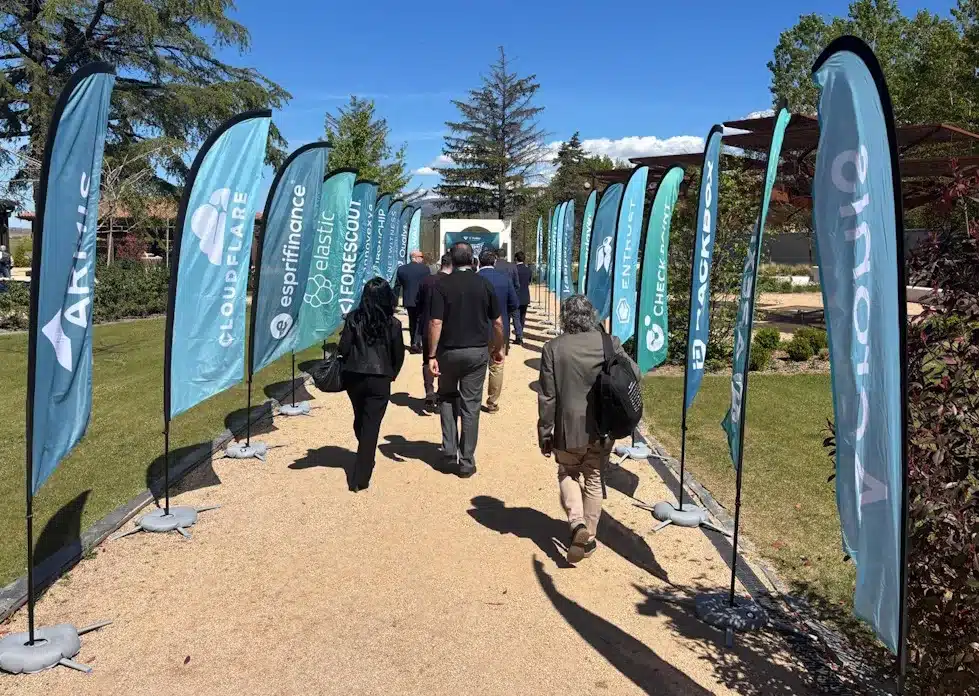
The block closed with a shared reflection: cybersecurity requires more and more investment, but also a change in focus, moving from isolated solutions to comprehensive value proposals, where the channel will be a decisive actor.
The second day closed this new edition with the celebration of “one-to-one” meetings between manufacturers and partners, providing a closer space to delve deeper into innovative solutions and directly analyze the current needs of customers. With this fifth edition, the V-Valley Cybersecurity Summit not only consolidates its growth, but also reinforces its role as an essential event for the promotion of cybersecurity within the business fabric.
