
Artificial intelligence is changing the way we develop and consume technology. The emergence of tools capable of generating code from natural language instructions, a trend known as Vibe Coding, opens up new possibilities for companies, which can now tackle projects that until recently were too expensive or complex from a technical point of view. However, this ease of creating applications also poses new challenges: how to ensure their security, control costs, manage data and prevent accelerated development from generating new technological dependencies.
This is precisely the scenario in which HCLSoftware wants to position itself. The company is strengthening its technological proposal with a vision that goes beyond automatic code generation. Its objective is to provide organizations with a platform capable of covering all stages of application development, from the identification of a business need to its integration and launch into production, maintaining control and governance throughout the process.
The company recently held a lunch with clients where it showed its positioning in the artificial intelligence market, not only as a provider of tools to generate applications through AI, but as a company capable of governing the entire development life cycle, from the initial idea to its launch into production.
«Artificial intelligence represents a transcendental change in computing, comparable to what the internet or, later, the cloud meant. “We are entering a new stage of abstraction that allows us to move towards activities of greater value for the business,” explained Daniel Olmo, client director of the HCLSoftware Spain team.
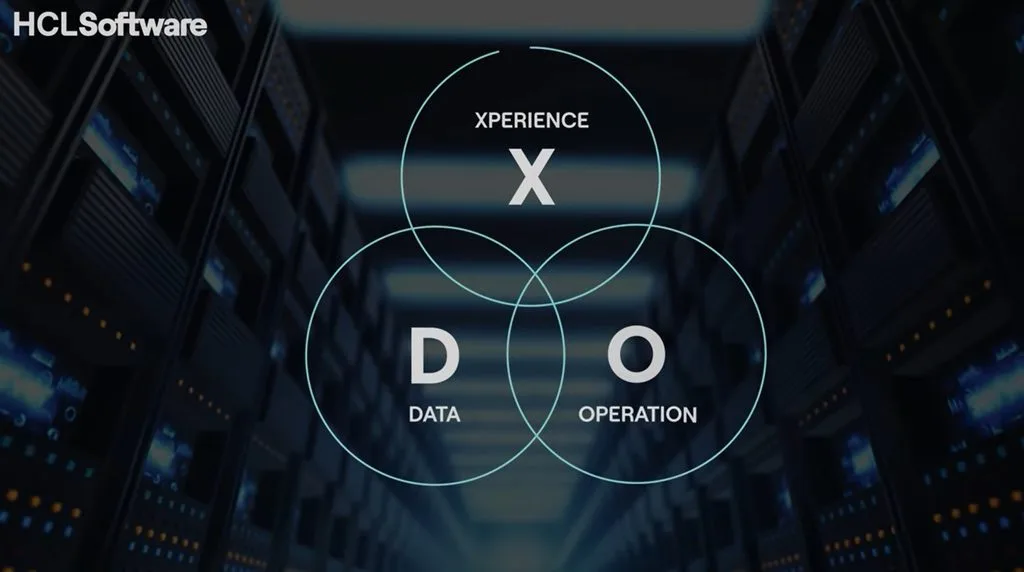
During the meeting, Olmo explained that the company structures its portfolio in three large areas: data, IT operations and interaction solutions or digital experience. A strategy that responds to its intention to act as a multi-product manufacturer and offer end-to-end solutions, capable of integrating into the technological environments of organizations.
Some of its recent announcements are framed in this context, including the acquisition of Robotiq.ai, a European company that reinforces its positioning in terms of digital sovereignty. This is an issue that is gaining weight in companies’ technological strategies, especially given the need to maintain control over their data, infrastructure and applications. Added to this is its commitment to HCL Domino Workspace, an email, collaboration and office automation proposal aimed at organizations looking for technological alternatives aligned with their digital sovereignty requirements.
Democratize development, but with guarantees
For Olmo, one of the main opportunities of generative AI applied to development is that it allows the recovery of projects that remained on hold because there was not enough technical or economic viability to address them. Vibe Coding reduces construction times and allows experimenting with new applications with a much lower investment than traditionally required.
«We can hyper-accelerate innovation in companies with a fraction of the resources we needed before. The development capacity is going to grow enormously and the limitation will no longer be so much in the possibility of building an application as in determining what is really worth developing,” he noted.
This new reality can also help reduce costs and make better use of the knowledge accumulated over years by organizations. However, the manager warned that generating an application quickly does not mean that it will be sustainable for the next ten or fifteen years. The construction of the code will be more agile, but its maintenance, evolution and integration will continue to require a technological vision.
Another risk is that companies end up replacing their old legacy applications with a new ecosystem of rapid developments, but equally difficult to maintain. To avoid this, Olmo considers it essential that the business assumes a leading role in identifying needs and defining the results sought, while technology departments must maintain responsibility for guarantees.
“We have a fantastic opportunity to democratize innovation and get business directly involved in creating solutions. But this democratization cannot turn into chaos. IT must provide the security, standards, data and governance necessary to make everything work,” he said.
The availability of quality data is another fundamental element. Applications generated by AI need access to reliable, correctly structured and governed information to respond to the needs of each business process. Otherwise, the speed of development will not necessarily translate into value for the organization.
Build, integrate, execute and govern
This need to combine speed and control is the approach of HCL Mosaic Vibe Studio. Jaime Requejo, Lead Architect at HCLSoftware, explained that the main problem that companies currently face is that it is relatively easy to prototype applications with AI, but much more complicated to trust them and take them to production.
During his speech, Requejo explained that 88% of business AI pilots do not reach production and that 45% of the code samples analyzed introduce some vulnerability. Data that, in his opinion, reflects the distance that still exists between experimenting with artificial intelligence and achieving operational results.
For this reason, he raised two questions that managers should ask themselves before promoting this type of initiatives: can we trust what we are building? And can we control how much it costs us?
HCLSoftware’s response involves a platform that articulates four major capabilities: build, integrate, execute and govern. Its operation allows starting from a business need expressed through a prompt to generate an application. Requejo showed as an example a time control system that, based on an instruction, allows the creation of a tool with an administration panel and functionalities to supervise workers’ time records.
But generating the application is only the beginning. The platform incorporates mechanisms to maintain traceability of the entire development process and establish rules or pipelines that determine how solutions should be built. In this way, IT departments can define and supervise the criteria that developments must meet, from design conditions to security policies.
The next phase is to prepare the application for production. To do this, HCL Mosaic Vibe Studio contemplates the analysis of vulnerabilities and their remediation before deploying the development. The purpose is to prevent the ease of generating code from ending up transferring applications that do not meet the necessary requirements to business environments.
«It is not enough that an application works or that we can build it in a few minutes. We need to trust it, know how it has developed and ensure that it complies with the rules established by the organization,” was one of Requejo’s central messages.
Foundry: identity, integration and cost control
The architecture is completed with the capabilities of Foundry, whose contribution was explained by Ángel Montero, solutions architect at HCLSoftware. This technology provides fundamental services so that the applications generated can be integrated into corporate environments and respect the standards already used by each organization.
Among its functionalities, identity management stands out, which allows maintaining the same authentication and access criteria as the rest of the business systems. It also offers integrations with different services, support for the main authentication standards on the market and connectors specifically developed to facilitate communication between applications.
Another especially relevant aspect is the control of token consumption. The platform allows you to monitor the spending associated with artificial intelligence models by project and user, with a granular audit level that makes it easy to know who consumes the resources, how much they use and what permissions they have assigned.
Foundry provides essential services so that the applications generated can be integrated into corporate environments and respect the standards already used by each organization.
This capability responds to a growing concern among companies: the cost of using AI models can increase rapidly when developments multiply and there are no adequate oversight mechanisms. Having detailed information allows you to establish limits, apply consumption policies and make decisions about the use of resources.
“The objective is that we can build an application in minutes, integrate it with the organization’s services and, finally, deploy it while maintaining the necessary control mechanisms,” explained Montero.
A platform, not just AI consulting
HCLSoftware’s proposal is based on a premise: the development of applications using artificial intelligence cannot work in isolation. Each new solution must integrate into an existing technology architecture, respect service commitments, and comply with the organization’s security and governance policies.
For this reason, the company defends a model in which the value does not reside exclusively in generating code, but in providing a platform that allows the entire process to be comprehensively managed. Its positioning also seeks to differentiate itself from that of the consulting firms that accompany companies in their AI adoption projects.
As Jaime Requejo summarized, HCLSoftware wants to act fundamentally as a technology manufacturer, providing a platform on which organizations can build and govern their own developments, in addition to offering services that facilitate their adoption.